
BLUE LOCK PWC
Rudel inc.Simulation
4.6733.00 Reviews
- Version
- 5.7.0
- Installs
- 1.00M
- Age Rating
- Teen
Screenshots

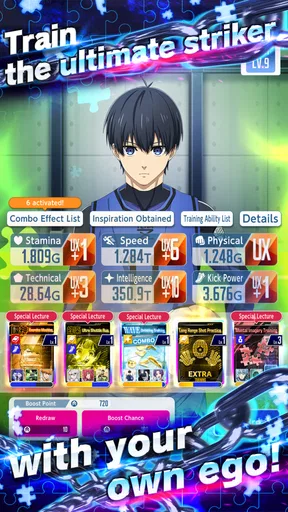
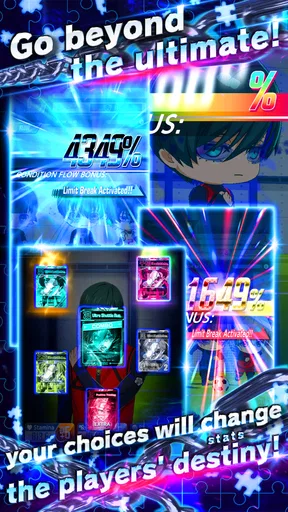

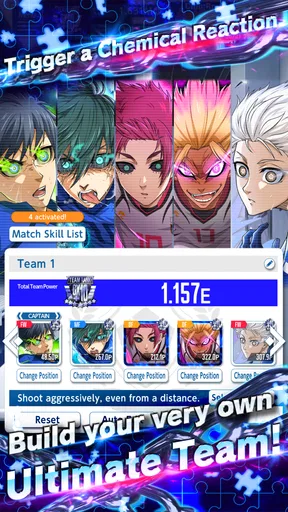
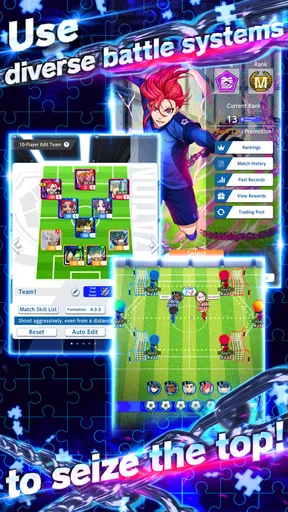

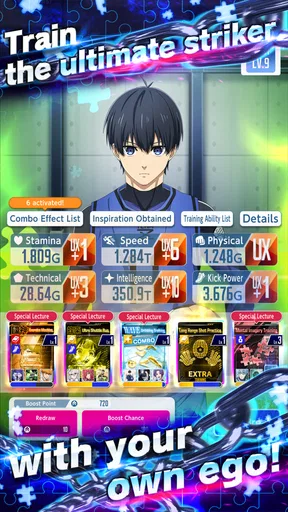
Our Review of BLUE LOCK PWC
 Analysis by Appyee
BLUE LOCK PWC caught my attention because it turns the intense striker competition of Blue Lock into a mobile simulation built around decisions, development, and repeated attempts to create a stronger team. I approached it less like a quick character-collection distraction and more like a game I might keep checking between ordinary tasks. That distinction matters: the first sessions are easy to enjoy, but the real question is whether the training loop remains satisfying after the initial excitement wears off.
My overall impression is positive, with an important qualification. This is a good fit if you enjoy planning player growth, comparing results, and gradually improving a squad rather than controlling every second of a football match. It is less suitable if you want a traditional football game with direct movement, manual passing, or a complete match-day experience. The appeal comes from building toward a better striker, not from replacing a console-style football title.
What the first week feels like
The opening stretch works because it gives the game a clear fantasy: I am not simply watching football; I am trying to shape a player capable of surviving a ruthless striker-selection environment. That goal gives the menus and development choices more meaning than they would have in an ordinary sports simulator. Even when a result is disappointing, it feels connected to the larger challenge of finding a better route for the team.
As a free simulation game from Rudel inc., it is designed to be approachable rather than intimidating. I can begin without paying, learn the basic rhythm, and decide whether the training-focused format suits me before treating it as a serious long-term hobby. The Teen content rating is also worth keeping in mind for younger players and families, especially because the presentation is built around competitive pressure and dramatic rivalry rather than relaxed recreational football.
The first useful habit is to resist spending every resource as soon as it appears. Early rewards can make rapid upgrades feel tempting, but a little patience helps reveal which players and development choices actually fit the way I want to build. I found it more rewarding to observe why a run succeeded or failed before immediately trying to force the next improvement. That small pause turns the game from a sequence of taps into a light planning exercise.
Another practical tip is to treat each training attempt as information, not only as a pass-or-fail test. If a player repeatedly falls short in a particular situation, I would change the development approach or supporting lineup instead of assuming that a higher rarity alone will solve the problem. This is one of the less obvious strengths of the format: the game encourages me to think about how pieces work together, even when the interface keeps the process fairly accessible.
The first week is also when the Blue Lock identity does most of its work. Familiar characters and the competitive premise give the progression emotional context. A generic football manager can make improvement feel like spreadsheet maintenance; here, the striker-centered theme makes every upgrade feel tied to a personal battle for recognition. That atmosphere is a major reason the early loop feels more distinctive than a standard sports collection game.
Still, the initial appeal has boundaries. Players who expect to take control of a footballer, dribble around defenders, and decide the outcome with their own reflexes may feel detached from the action. The simulation structure places more emphasis on preparation and outcomes than on manual skill. I would choose a conventional football game instead if direct control is the main reason I play sports games.
Building a routine instead of chasing the opening rush
Once the novelty settles, the game needs to earn a regular place in my day. Its strongest recurring use case is the short planning session: I have a few minutes, review the current team situation, choose what deserves attention, and leave with a clearer next step. That makes it convenient for commuting, waiting rooms, or a short evening break, provided I am comfortable with a game that rewards repeated management more than uninterrupted play.
The month-to-month question is whether improvement still feels meaningful when individual gains become smaller. In my experience, the answer depends heavily on how much I enjoy optimization. If I like comparing lineups, testing development decisions, and revisiting a team after a setback, the steady progress can remain appealing. If I need a constant stream of new mechanics or dramatic match control, the same structure may begin to feel repetitive.
A realistic routine would be to check the squad after work, identify one weak link, and make a focused adjustment rather than trying to rebuild everything. I might use a short session to prepare a promising striker, then return later to see whether the change helped the wider team. This approach keeps the game from taking over the evening and makes progress easier to notice. It also reduces the common mobile-game mistake of making several changes at once and then having no idea which one mattered.
For long-term value, I would separate collection excitement from actual team-building satisfaction. New characters can refresh interest, but they do not automatically fix a poorly planned squad. The more durable enjoyment comes from learning what kind of lineup I personally prefer and seeing whether it performs consistently. That is a stronger foundation than simply waiting for the next attractive addition.
The scale of the audience suggests that the concept has reached beyond a tiny niche: BLUE LOCK PWC has passed one million installs and holds a 4.6 average from roughly forty-two thousand ratings. Those figures do not guarantee that every player will enjoy the loop, but they do make the game easier to approach as an established mobile title rather than an obscure experiment. I would still judge it by its daily rhythm, because popularity cannot remove the underlying repetition of a simulation game.
Where the maintenance starts to matter
The main maintenance burden is attention. A team-building game asks me to remember what I am developing, what I am testing, and which resources are worth saving. That is manageable when I play with a simple plan, but it becomes tiring if I feel obliged to inspect every reward, every improvement, and every possible combination. The game is more enjoyable when I set a modest goal for a session instead of treating every available action as mandatory.
Version 5.7.0 is the current version, and keeping the app updated is sensible for anyone who wants the intended current experience. I would not make updates the center of my routine, though. The important maintenance is personal: deciding how often I want to play, how much time I am willing to spend on gradual development, and whether the latest progression still feels like play rather than a checklist.
The free entry point is helpful, but the in-app purchase range, from $1.09 to $105.99 per item, means I would approach spending carefully. I would first establish whether the core training loop holds my attention without purchases. If I later decide to spend, I would set a firm personal limit and avoid treating a disappointing result as a reason to buy again. That is not a criticism unique to this game; it is simply the sensible way to handle a free simulation with optional paid items.
One useful discipline is to keep a mental distinction between progress that improves understanding and progress that merely shortens waiting or removes friction. The first kind gives me a reason to return because I am learning how to build better. The second can be convenient, but it may make the game feel empty if too much of the challenge disappears. For me, preserving some resistance is important because the struggle to create a stronger striker is the point of the experience.
I would also avoid playing only when I am frustrated. A bad result can encourage impulsive changes, but that usually makes it harder to identify the real weakness. Taking a break and returning with one specific question—such as whether the lineup or the development plan is the problem—creates a healthier routine. This is a small but meaningful advantage for players who want the game to remain a hobby over several months.
Why fatigue can arrive
The biggest source of fatigue is repetition without a fresh decision. If several sessions feel like collecting the same rewards, repeating familiar training, and watching outcomes that do not teach me anything new, the Blue Lock theme cannot carry the experience by itself. The game needs my involvement in planning to remain interesting; passive repetition is where its energy drops.
There is also a tension between character attachment and practical team choices. I may prefer a favorite character, but the most emotionally satisfying option is not always the most efficient one for the current objective. That trade-off can be enjoyable when the game lets me experiment, yet frustrating when progress seems to favor a narrow solution. I like having reasons to make difficult choices, but I do not want every decision to feel like abandoning the characters I came to see.
The simulation format can create another kind of distance. In a manually controlled football game, I can blame a missed shot on my timing or celebrate a clever pass I made myself. Here, the result is more indirect. My responsibility lies in preparation, selection, and development. That can be satisfying for a strategist, but it may feel unsatisfying for someone who wants immediate physical feedback from each play.
Compared with a traditional football manager, this game feels more focused on the striker fantasy and the Blue Lock setting than on running every aspect of a real club. Compared with an action football game, it offers less direct control but more room for planning a player’s path. Those comparisons clarify its place: it is best viewed as a character-driven football simulation, not as a replacement for either a full management simulator or an arcade match game.
I would skip it if I dislike anime-inspired competition, gradual progression, or repeated team experimentation. I would also skip it if I want a game that can be played entirely through reflexes and immediate control. The free price makes trying it low-risk, but free access does not change the basic commitment: the player must enjoy the process of returning, adjusting, and trying again.
Who will keep coming back
The strongest audience is someone who already likes Blue Lock and wants a more interactive way to spend time with its striker-centered world. That player will probably appreciate the connection between character development and competition. The game also suits mobile players who enjoy short sessions with a clear long-term objective, especially those who prefer thinking about a lineup to mastering touch controls.
It can work for a football fan who is curious about simulation but does not want the complexity of a full club-management game. The focused premise gives the experience a readable direction. I do not need to understand every possible football system before I begin; I can start with the question of how to make a striker more effective and gradually decide how deep I want to go.
On the other hand, I would recommend a different option to anyone seeking a complete league experience, detailed real-world management, or continuous manual matches. BLUE LOCK PWC is not strongest when judged by those standards. Its value comes from its own narrower identity, and asking it to behave like another genre only creates disappointment.
After the first month, I would judge my future with the game by one simple test: do I still have a specific reason to return? If the answer is “I want to test this player,” “I want to improve this weakness,” or “I want to see whether this lineup can finally work,” the loop is still alive. If the answer is only “there are rewards waiting,” the habit is probably becoming maintenance rather than entertainment.
My long-term verdict
BLUE LOCK PWC earns lasting space when I treat it as a thoughtful striker-development game, not as a substitute for playing football directly. Its first-week appeal comes from the recognizable world and clear competitive goal, while its month-to-month value depends on whether I enjoy making small, deliberate improvements. The game rewards patience more than impulse, and that is both its best quality and its main barrier.
I appreciate that I can start for free and decide naturally whether the simulation fits my routine. I also appreciate the focused identity: the game does not need to imitate every football title because it has a specific interest in the rise of a striker. At the same time, the optional purchase range deserves restraint, and the repeated training rhythm can become tiring if I stop making meaningful decisions.
For me, the right way to play is in controlled sessions, with a clear development goal and no pressure to upgrade everything immediately. I would save resources until I understood my team, test one change at a time, and take breaks when the routine started feeling automatic. That approach preserves the sense of competition instead of turning the app into another obligation.
Released on April 23, 2024, and available for devices running Android 9 or later, the game is easy to consider if you want a mobile simulation connected to Blue Lock. Its Teen rating, free entry, current version 5.7.0, and broad player base make it approachable, but the final decision should come down to your preferred kind of interaction. If planning a striker’s growth sounds more exciting than controlling every pass, I think it is worth trying. If you need constant action or a full football-management sandbox, I would look elsewhere.
My recommendation is therefore cautious but clear: give it a fair first week, then judge it by the quality of your decisions rather than the excitement of new rewards. When the game continues to make me curious about what a different lineup or training choice might achieve, it has real staying power. When that curiosity disappears, there is no need to force the habit. That balance is what makes this a worthwhile simulation for the right player, rather than a universal football recommendation.
Verdict
Strengths of BLUE LOCK PWC
- Faithfully captures Blue Lock’s competitive football atmosphere.
- Large roster of characters with distinct skills and personalities.
- Team-building offers plenty of strategic choices and experimentation.
- Regular events provide new goals and limited-time rewards.
- Playable on mobile with short sessions suited to quick breaks.
Limitations of BLUE LOCK PWC
- Progress can become heavily dependent on recruiting stronger characters.
- Duplicate characters and upgrade materials may be frustrating to obtain.
- Battles may feel repetitive after the initial excitement wears off.
- Limited-time content can pressure players to log in frequently.
- Storage use and battery drain may be noticeable on older devices.
Similar Picks in This Category
View All
Truckers of Europe 3
Wanda Software4.3

Town Building Life Simulator
XGame Global4.2

Fidget Toys Trading・Pop It 3D
Freeplay Inc4.7

Sculpt People
CrazyLabs LTD4.4

Scary Teacher 3D
Z & K Games4.2

Hair Tattoo: Barber Shop Game
CASUAL AZUR GAMES4.3
Frequently Asked Questions
What is BLUE LOCK PWC?
BLUE LOCK PWC is a mobile soccer role-playing and training simulation game inspired by the BLUE LOCK anime and manga. Instead of directly controlling every match, you build and develop players, improve their abilities, create a competitive team, and guide them through intense training scenarios. The game focuses heavily on character progression, strategic team building, and collecting familiar players from the series.
Is BLUE LOCK PWC free to download and play?
Yes, BLUE LOCK PWC is generally available as a free-to-play mobile game, although optional in-app purchases are included. These purchases may provide recruitment currency, items, stamina, or progression advantages, but spending is not always required to enjoy the main gameplay. Players should still expect a gacha-style recruitment system, where obtaining specific characters can depend on chance and available event banners.
Does BLUE LOCK PWC require an internet connection?
An active internet connection is normally required to play BLUE LOCK PWC because the game connects to online services for account management, events, recruitment banners, rankings, updates, and gameplay data. It is therefore not an ideal choice for completely offline play. A stable Wi-Fi or mobile-data connection is recommended, particularly when downloading additional files or participating in limited-time content.
What kind of gameplay does BLUE LOCK PWC offer?
BLUE LOCK PWC combines player development, team management, training decisions, and simulated soccer matches. You select characters for training, choose development options, improve statistics, and organize a squad suited to your preferred strategy. Matches are more focused on planning and progression than manual real-time controls, so the experience is best suited to players who enjoy anime-based management RPGs and long-term character customization.
Can beginners enjoy BLUE LOCK PWC, and are there age or device considerations?
Beginners can enjoy BLUE LOCK PWC, especially if they are familiar with the BLUE LOCK characters, although the number of menus, upgrade systems, currencies, and training choices may feel overwhelming at first. The game is designed for compatible Android and iOS devices, but performance can vary depending on hardware and available storage. Check the store listing for current requirements, age guidance, and regional availability before downloading.
Play our best games!


